

SPIRITS & RTD BRANDS · CANADA
Spirits sites that sell past the gate.
Websites for distilleries and spirits brands, built in Calgary. Highwood leads to a shop, Sipp to a store locator and Centennial 33 to a reservation.
Nobody tastes a whisky through a screen.
So the site has to do the tasting’s job. It has to say where the spirit was made, how long it waited and what sets one bottle apart from the next, then tell the visitor where they can pick one up tonight. Plenty of spirits sites stop at a moody hero and a newsletter box. The ones that sell give every bottle its own page and make every page a way to the shelf.
Answered straight
What a spirits brand website has to do
It gets a visitor of legal age through the gate in one tap and onto the bottle. Behind the gate each expression has its own page, the age statement, the cask, the botanicals or the mash, the tasting notes and the serve, written so a shopper can tell two bottles apart. The distillery and the place carry the brand story, told once and linked from every bottle. Every page ends at a way to get the bottle, an online shop where the brand can ship, a store locator where it is stocked, or a reservation for a release too small for either.
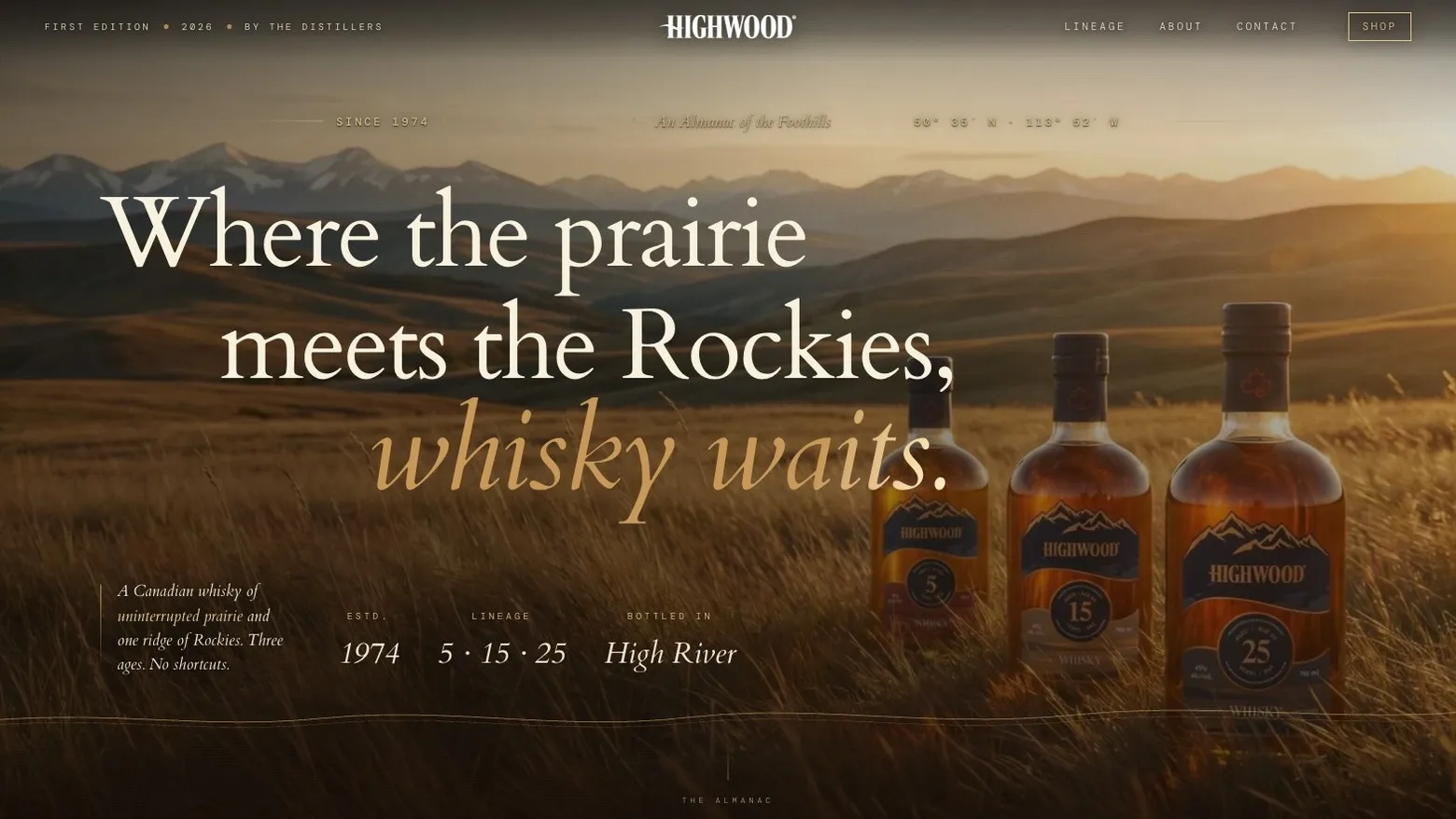
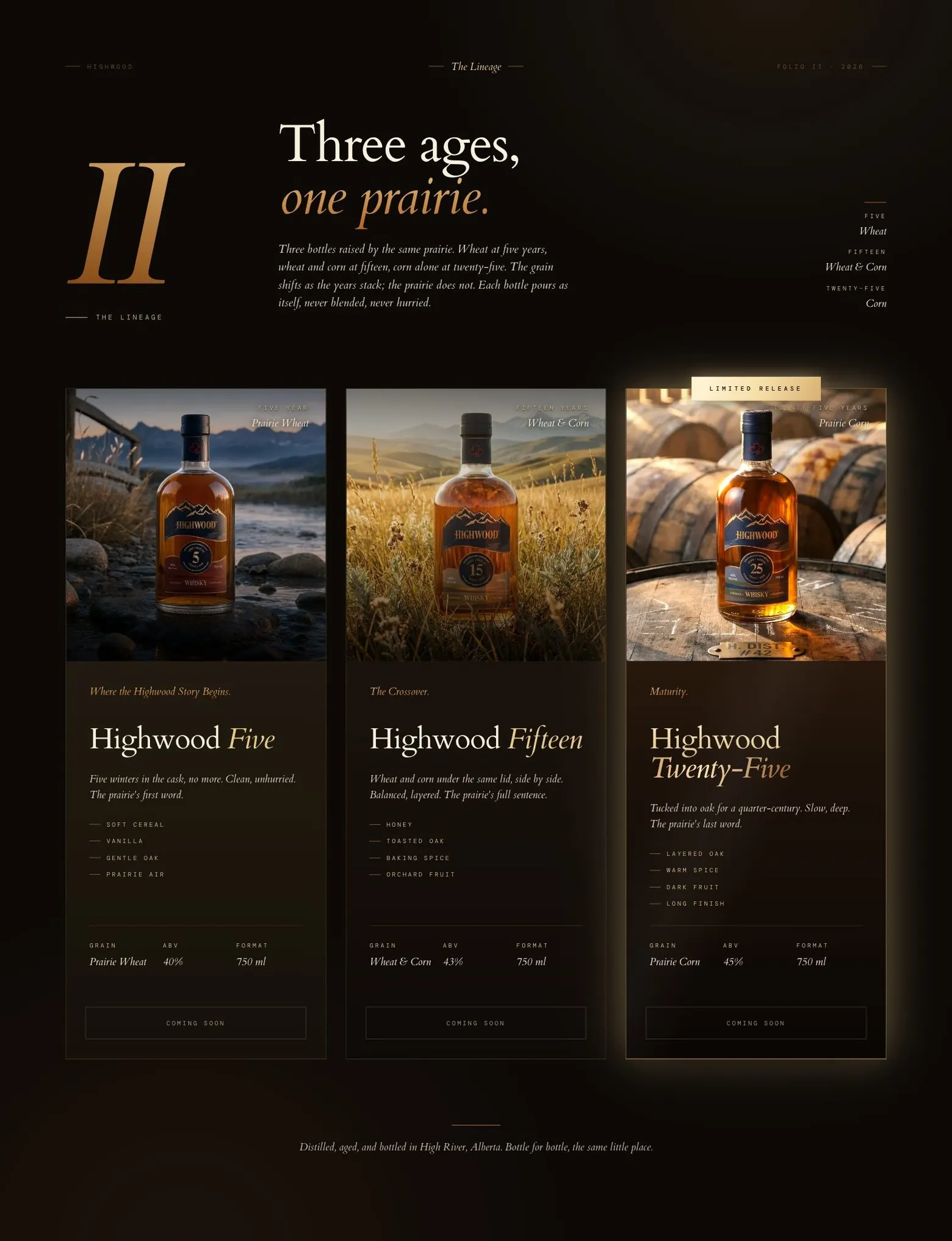
Three sites built here show the three routes. Highwood Whisky explains its High River distillery and the 5-, 15- and 25-year whiskies, and its product pages link straight to the online shop. Sipp Vodka is built around two jobs, finding the drink in a vodka and ready-to-drink range and finding a store that carries it, with a launch page for the four Sipp N’Soda flavours. Centennial 33 is a launch site for a numbered release of 800 bottles, one scroll through the whisky, the story and the distillery that closes on how many bottles are left, counted from the shop’s inventory, with the reservation beside the count.
Meridian15 designs and builds these sites from Calgary for distilleries and spirits brands across Canada. The wider job, packaging, launch creative and paid media, is on the alcohol brand marketing page. Every site is quoted to its scope in writing before work starts, and the brand owns it outright.
Trusted by



Three spirits sites, three ways to the bottle.
A shop for Highwood, a store locator for Sipp, a reservation for Centennial 33. Each frame opens that brand’s case on the portfolio.
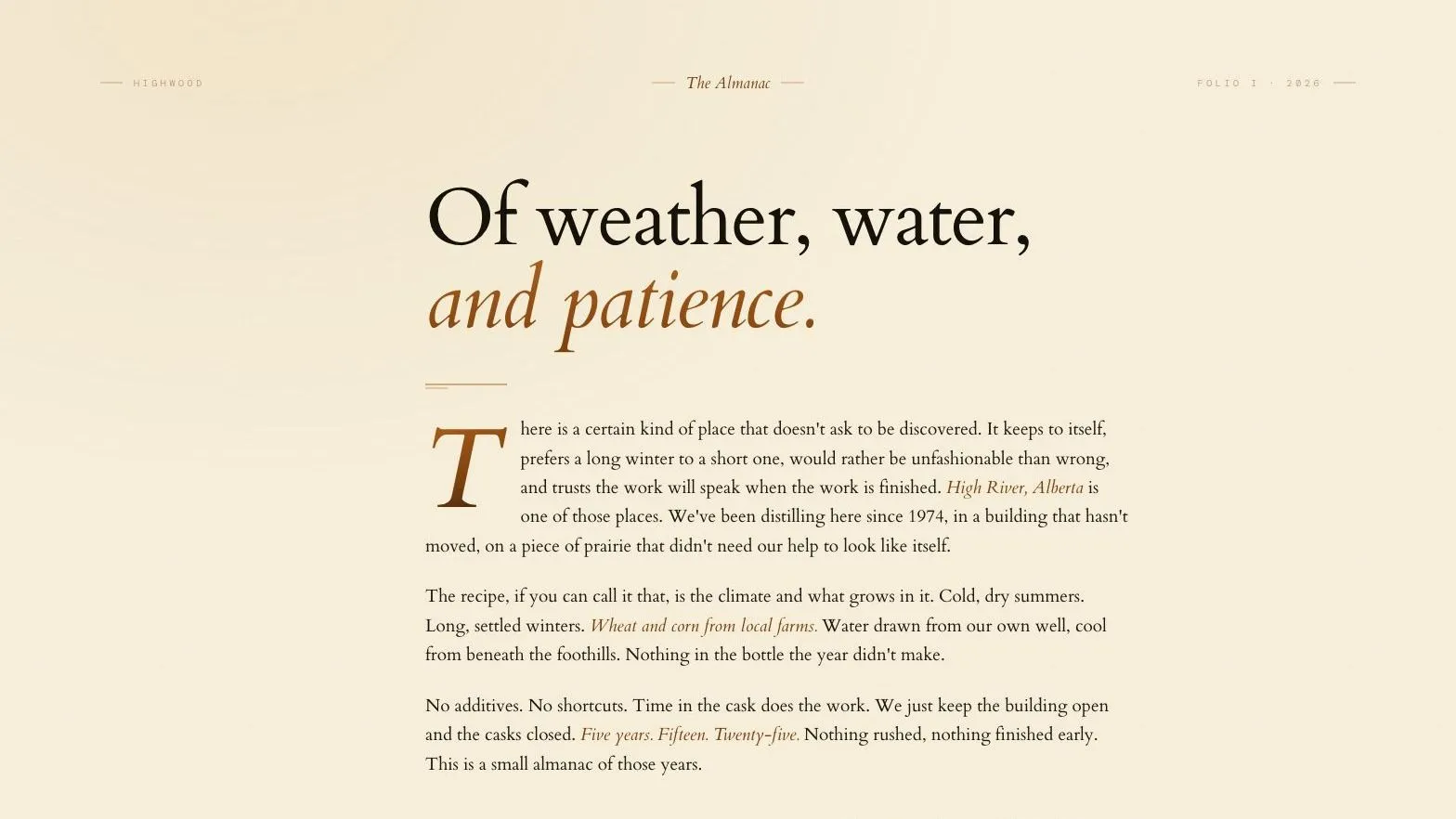
Highwood WhiskyThe case The distillery story leading to the 5-, 15- and 25-year range and the shop
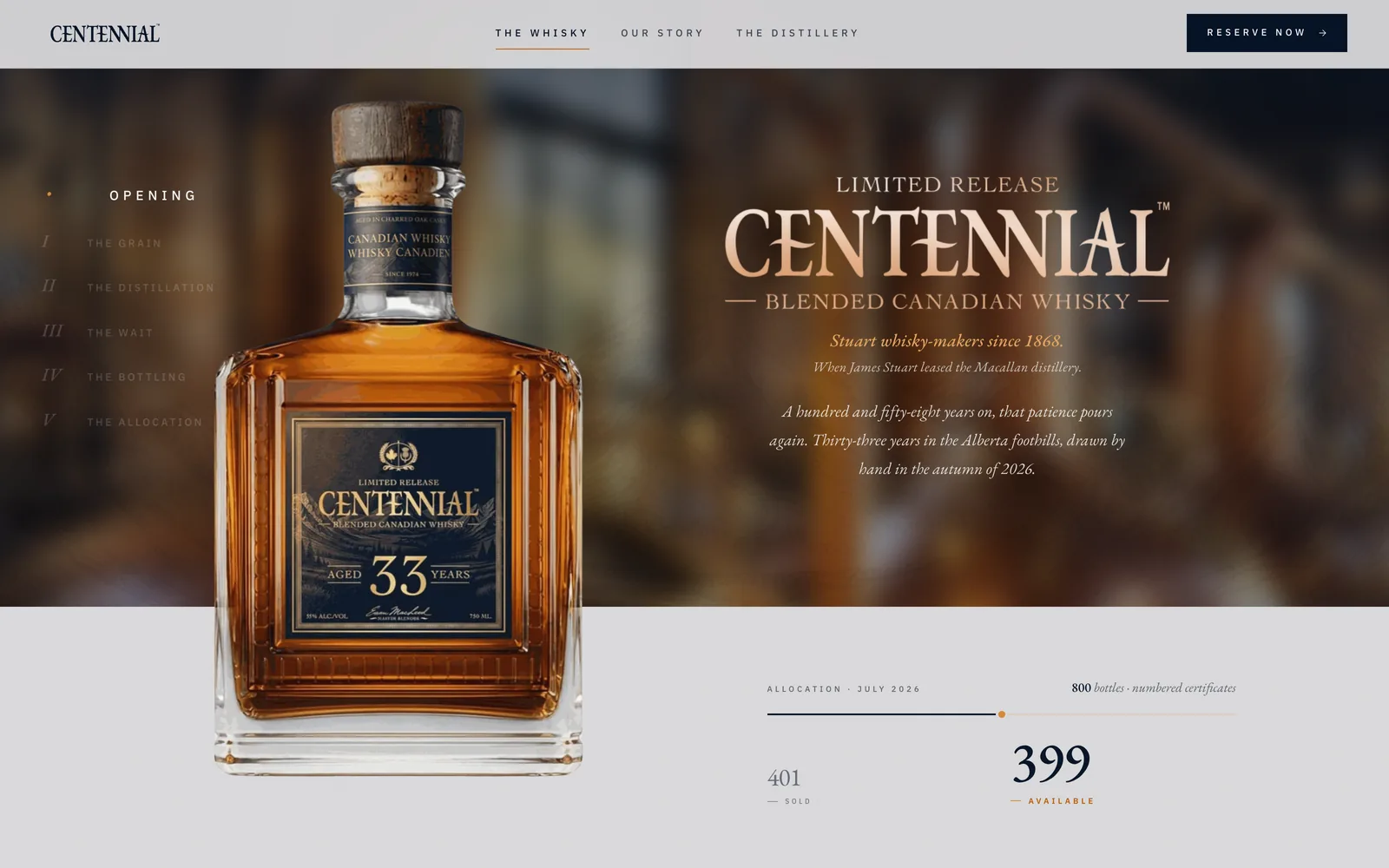
Centennial 33The case One release, the bottle and the count of bottles left beside the reservation
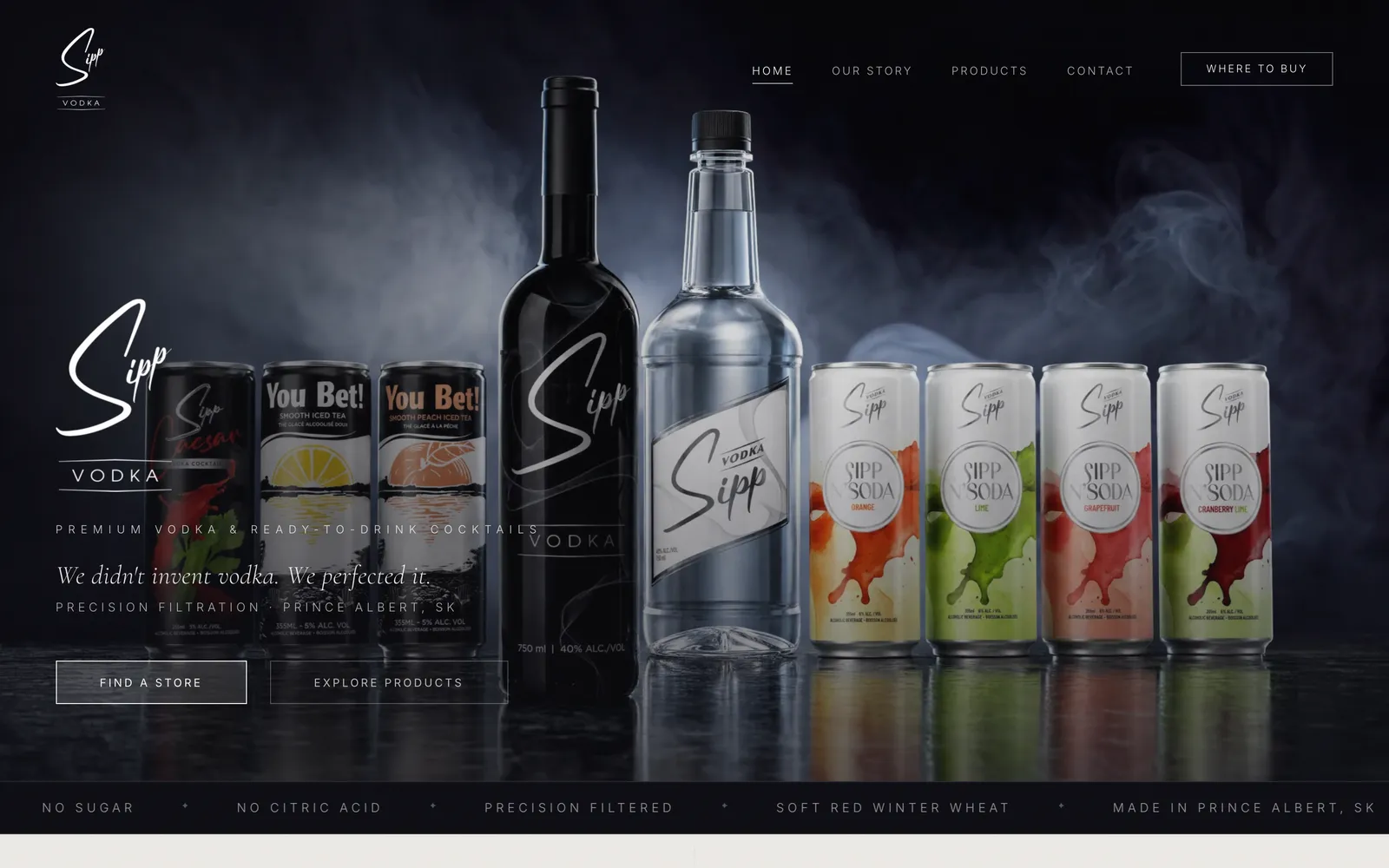
Sipp VodkaThe case The vodka and ready-to-drink range with Find a store on the first screen
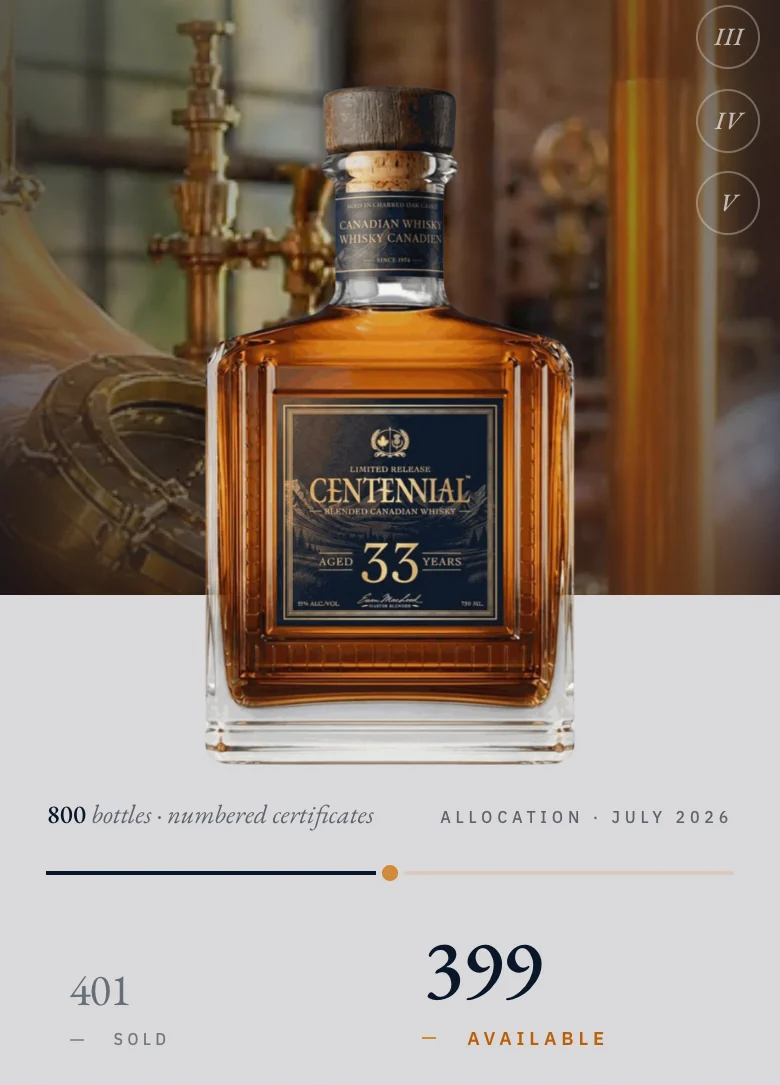
The countThe case Checking what is left of the release on a phone
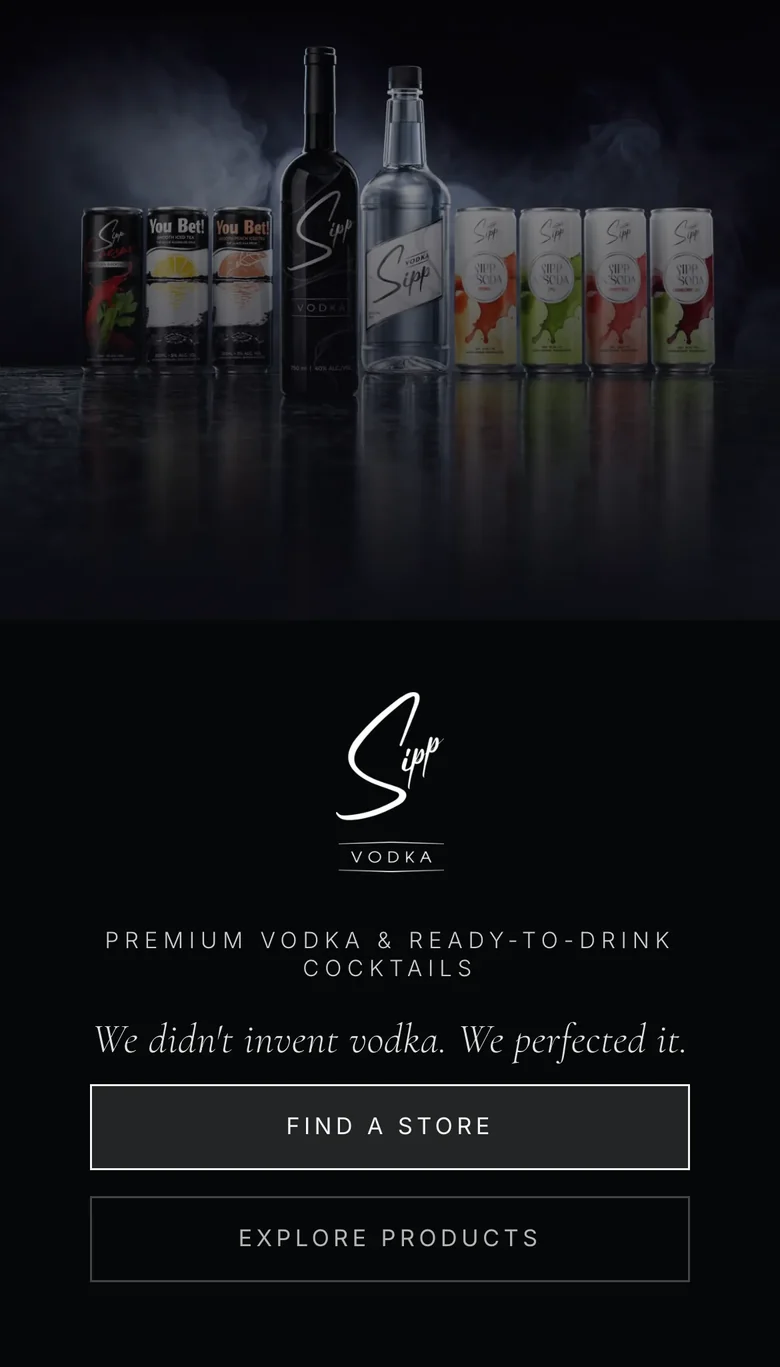
Find a storeThe case Find a store and Explore products, one tap from the first screen on a phone
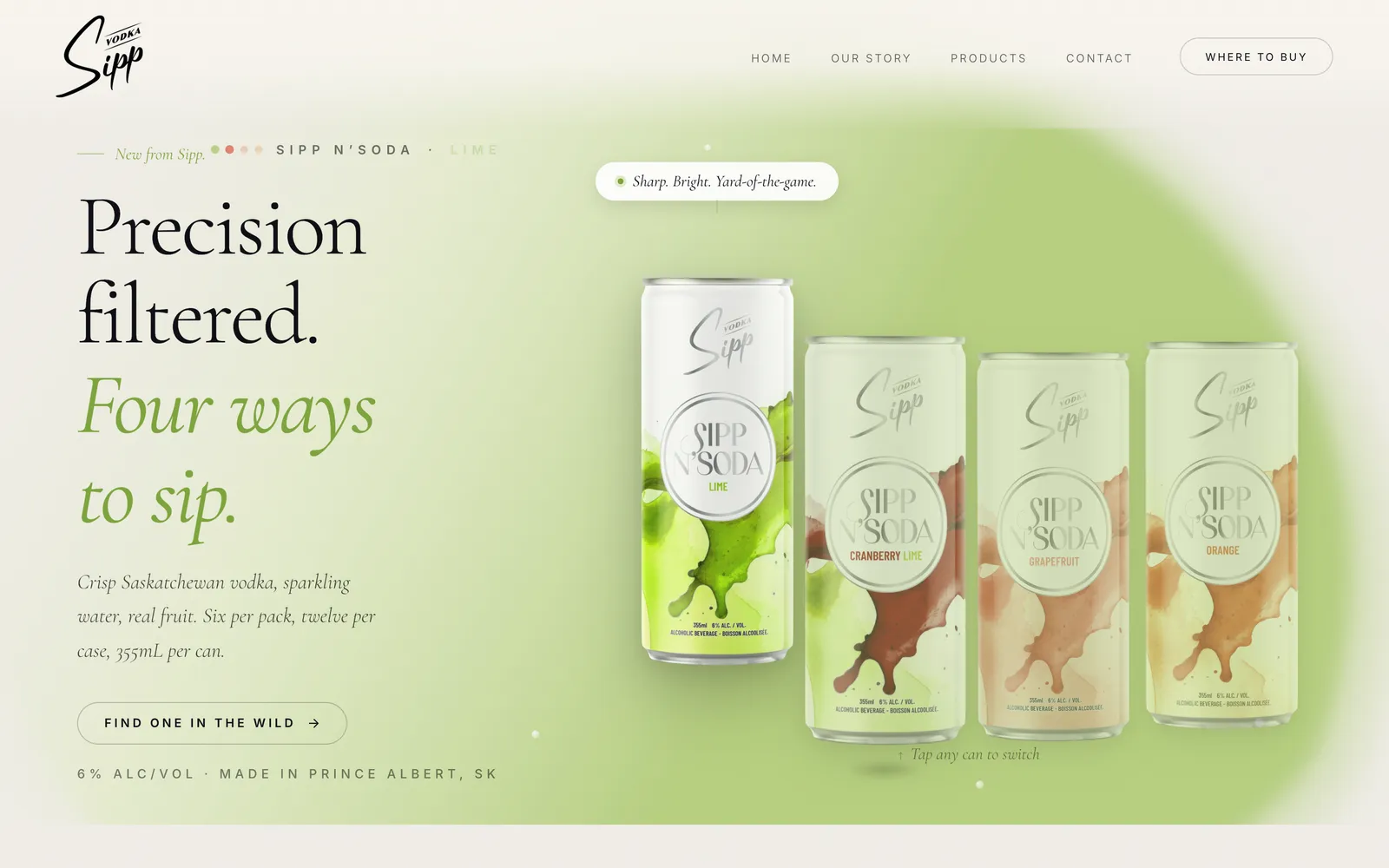
Sipp N’SodaThe case A launch page for four ready-to-drink flavours, each with a route to a retailer
Four things a spirits site needs.
Scoped as one build. Each one is live on a site named above.
A gate that remembers
One question, asked on the first visit and remembered on that browser, and light enough that the first screen still loads fast on a phone. The visitor should be reading about the bottle a second after arriving.
A page for every expression
The age statement, the cask, the tasting notes and the serve, one bottle to a page, so a shopper comparing two can see why one costs more. Highwood’s product pages take the 5-, 15- and 25-year one at a time, each with a link to buy it.
The way to the bottle
A shop where the brand can ship, a store locator where it is stocked, a reservation where the release is small. Highwood links to its shop, Sipp to its store locator, and Centennial 33 takes reservations for its 800 bottles.
The place, told once
Where it is distilled and who makes it, written as one story the whole site links back to. Highwood’s is set as an almanac of the foothills. Centennial’s is the rickhouse where the cask spent thirty-three years.
What keeps a spirits site from selling bottles.
Five mistakes that show up on spirits brand sites. Each one loses the visitor somewhere between the gate and the shelf.
A gate that asks every visit
An age check that forgets the answer makes a returning buyer prove their age every time, and a heavy one holds up the first screen on a phone. Ask once, remember it, keep it light.
The whole range on one page
Three expressions in one scroll means none of them can be found, compared or linked on its own. A shopper who searched for the 15-year lands on a page about everything.
A product page that ends in a signup box
The visitor who just read the tasting notes wants the bottle. If the page ends at a newsletter form instead of a shop link or a store lookup, the next stop is a search engine and somebody else’s bottle.
A limited release with no count
An allocation that sells out quietly leaves the late visitor guessing. Show how many are left and take the reservation beside the number, the way Centennial 33 does.
The cans hidden behind the bottle
A ready-to-drink line sells to a different buyer than the spirit does. Give it its own pages and its own launch page, the way Sipp gives Sipp N’Soda its four flavours, instead of a tile at the foot of the vodka page.
You don’t need a darker hero. You need the bottle one tap past the gate.
- 800
- Bottles in the Centennial 33 release
- 3
- Age statements on Highwood’s product pages
- 4
- Sipp N’Soda flavours on one launch page
- 1
- Fixed quote, scoped before we start
How a spirits site build actually runs.
Four phases with named deliverables. The route to the bottle is settled first, because it decides what every product page ends in.
01Wk 1
Audit
The range, where each bottle is stocked, where the brand can ship, the current site and its gate. Out: a written gap report and the scope, quoted as one number.
02Wk 1-2
Range and copy
A page per expression, the distillery story, and the wording for the gate and the shop. Out: every page’s copy and the product details.
03Wk 2-6
Design and build
The gate, the product pages, the shop, locator or reservation, and a build that stays quick on a phone. Out: a live site the brand owns outright.
04Wk 6+
Launch and search
Product schema that matches each bottle’s page, the shop and the locator tested end to end, and a count of clicks to buy by bottle. Out: numbers you can check.
FAQ
Questions, answered.
Who builds websites for whisky and spirits brands in Canada?
Meridian15 does, from Calgary. The studio designed and built the sites for Highwood Whisky, Sipp Vodka and Centennial Whisky. Highwood’s takes a visitor from the High River distillery to the 5-, 15- and 25-year whiskies and on to the shop, Sipp’s pairs every drink in its range with a store locator, and Centennial’s is a launch site for a numbered 33-year release that takes reservations.
What should a distillery website include?
An age check that asks once, a page for each expression with its age statement, cask and tasting notes, the distillery’s story, and a way to get the bottle from every product page, whether that is a shop, a store locator or a reservation. It should stay quick on a phone.
Should a spirits website have an age gate?
Yes. Highwood, Sipp and Centennial all open with one. The gate should ask once, remember the answer on that browser, and load before anything heavy so it never slows the first screen.
Can you build a store locator for a vodka or whisky brand?
Yes. Sipp’s site pairs its product pages with a store locator, so a visitor who finds a drink they like can find a retailer that carries it. It can sit on every product page as well as on its own page.
Can you build a launch site for a limited release?
Yes. Centennial 33 is a launch site for a numbered release of 800 bottles. It runs as one scroll through the whisky, the story and the distillery, shows availability from the shop’s inventory, and takes reservations beside the count.
Do you build websites for ready-to-drink and canned cocktail brands?
Yes. Sipp’s site covers the vodka and the canned range, with a launch page for the four Sipp N’Soda flavours. Sipp N’Soda and You Bet!, Sipp’s vodka iced tea, got their launch artwork through a separate creative engagement.
How is this different from your alcohol brand marketing work?
This page covers the site alone. The alcohol brand marketing page covers the wider job, packaging, launch creative, paid media and retail. The two can be scoped together or apart.
How long does a spirits website take?
A simple site launches in 2 to 4 weeks from kickoff, and a full redesign of an existing site ships in 4 to 6 weeks. A build with a shop, a store locator or an inventory-linked release runs 4 to 8 weeks or longer.
What does a spirits website cost?
Every build is quoted to its scope after a short audit, one fixed number in writing before work starts. The number of bottles, the shop or locator, and any launch pages move it. There is no rate card.
Spirits site audit
Free spirits site audit.
Your site checked the way a buyer uses it, the gate, the product pages and the way to the bottle, and a written plan. Reply within one business day. Yours to keep.
Or call direct+1 587 328 1335
Not sent
Couldn’t send that.
Network might be flaky. Call +1 587 328 1335 and we’ll pick this up directly.